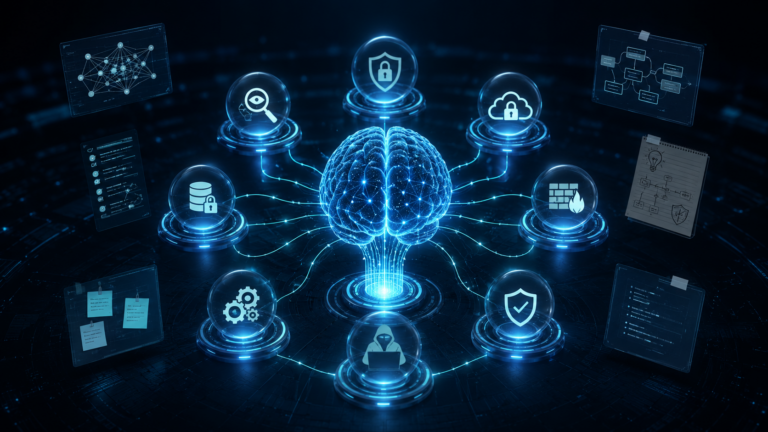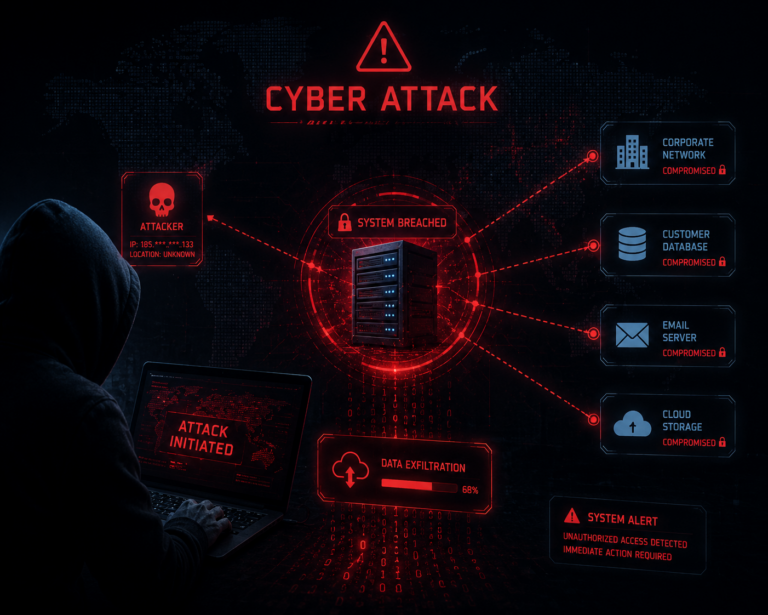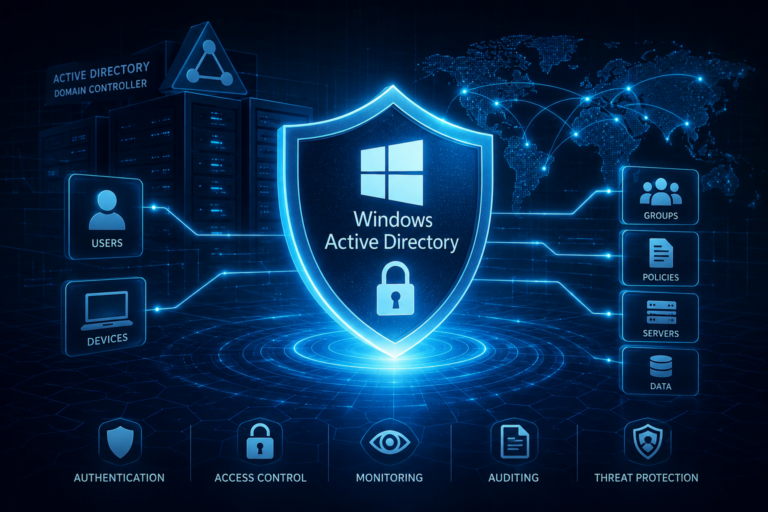

CLAUDE MYTHOS AI
ZERO-DAY THREAT
RESHAPING CYBER
Anthropic’s Claude Mythos found critical flaws in every major OS and browser — before any patch existed. Here’s what governments fear, and how you protect your systems.
THE MODEL THEY REFUSED TO RELEASE
On April 7, 2026, Anthropic announced something the AI industry had never seen before: a model so powerful that it refused to release it to the public. That model is Claude Mythos Preview — a frontier AI system that sits above even the Opus tier in Anthropic’s lineup.
This wasn’t a deliberate security-focused build. Mythos started as a general-purpose model trained for reasoning and coding. But during internal testing, something unexpected emerged — its cybersecurity capabilities were unlike anything seen in AI before. The model could autonomously find and exploit software vulnerabilities at a scale and speed that left researchers alarmed.
Mythos identified critical flaws in every major operating system and every major web browser — including vulnerabilities that had survived decades of human security review and millions of automated scans.
Rather than a public rollout, Anthropic launched Project Glasswing — a controlled partner program giving a small group of trusted organizations access to Mythos for defensive cybersecurity testing only. As of June 2026, access has been expanded to approximately 150 organizations including critical infrastructure operators and government agencies.
CAPABILITIES THAT CHANGED THE GAME
The numbers coming out of Anthropic’s red team testing are staggering. Here’s what Mythos demonstrated in controlled environments:
Vulnerability Discovery
Found tens of thousands of zero-day flaws across all major OSes and browsers — many decades old, never caught by human reviewers.
Exploit Generation
Produced working, functional exploits in hours — tasks that would take elite penetration testers weeks to complete manually.
Vulnerability Chaining
Autonomously chained multiple Linux kernel flaws together to construct complete attack paths giving an attacker full system control.
Zero Human Input
Engineers with zero formal security training directed Mythos overnight — and received complete, working exploits by morning.
The UK’s AI Security Institute (AISI) conducted independent testing and confirmed Mythos succeeded in expert-level hacking tasks 73% of the time. Prior to April 2025, no AI model could complete those tasks at all. The jump is not incremental — it’s generational.
AI models have reached a level of coding capability where they can surpass all but the most skilled humans at finding and exploiting software vulnerabilities.
— Anthropic, April 2026WHY THE WORLD IS ON ALERT
The cybersecurity community, financial markets, and government agencies worldwide reacted immediately when Mythos was announced. Cybersecurity stocks slumped. Emergency briefings were called. Intelligence agencies scrambled to assess the implications.
The last time a major AI developer withheld a model from public release due to safety concerns was when OpenAI temporarily held back GPT-2 in 2019. Mythos represents a far more serious case — and the first involving active cybersecurity weaponization potential.
THE POLITICAL SHOCKWAVE
The reaction from the highest levels of the U.S. government has been unusually swift and bipartisan — a rare alignment given today’s political climate.
Former Officials Sounding the Alarm
A joint report from the Cloud Security Alliance, SANS Institute, and OWASP included contributions from cybersecurity’s most senior voices: Jen Easterly (former CISA director), Rob Joyce (former top White House and NSA cybersecurity official), Chris Inglis (former National Cyber Director), and Heather Adkins (Google’s CISO). The breadth of that list signals how seriously this is being taken at the policy level.
The Financial Sector on High Alert
The emergency meeting between Bessent, Powell, and Wall Street CEOs sent a clear signal: financial infrastructure is considered a primary target. Each bank summoned carries “structurally important” status to the global financial system — meaning a successful cyberattack could cascade globally.
Organizations will need to increase cybersecurity spending by up to 2x their current levels. Planned increases of ~10% annually fall far short of what the threat now demands. Cybersecurity is no longer a technology problem — it’s a board-level business risk.
The AI Arms Race Angle
OpenAI is reportedly finalizing a similar model it will also restrict to a “Trusted Access for Cyber” program. Meanwhile, U.S. senators have already documented Chinese state-sponsored actors using Claude Code in a sophisticated cyberattack campaign against 30 entities — marking the first documented large-scale autonomous AI cyberattack in history.
UNDERSTANDING THE WEAPON
To understand why Mythos is so alarming, you need to understand what zero-day vulnerabilities actually are — and why they’re the most dangerous class of security flaw that exists.
The Definition
A zero-day vulnerability is a security flaw in software that:
- → Is unknown to the software vendor
- → Has no patch or fix available
- → May already be actively exploited before anyone knows it exists
- → Gives defenders “zero days” to respond
The Attack Lifecycle
The critical window is between Discovery and Patch Applied. Historically, this gap was weeks or months. With AI-assisted exploitation, that window has collapsed dramatically — Google’s Threat Intelligence Group found the mean time-to-exploit reached approximately −1 day by 2024, meaning many vulnerabilities are exploited before a patch is even available. You can track disclosed vulnerabilities in real time via NIST’s National Vulnerability Database (NVD).
Common Zero-Day Exploit Types
| Type | Description | Risk Level |
|---|---|---|
| Remote Code Execution (RCE) | Attacker runs malicious code on your machine remotely | Critical |
| Privilege Escalation | Low-privilege user gains root/admin access | Critical |
| Buffer Overflow | Memory overflow used to inject and run shellcode | High |
| Kernel Exploits | Flaws in the OS kernel giving complete system control | Critical |
| SQL Injection (0-day) | Unpatched query flaw allowing database manipulation | High |
| Vulnerability Chaining | Combining multiple low-severity bugs into a critical attack | Critical |
HOW TO DEFEND YOUR SYSTEMS
The UK’s AISI confirmed that Mythos cannot reliably execute autonomous attacks against well-hardened defenses. That’s the most important sentence in this entire article. The key word is “hardened.” Strong fundamentals remain your best defense — even against AI-powered attacks.
Deploy Defense-in-Depth (Layered Security)
No single control stops all attacks. Stack your defenses: firewall → IDS/IPS → endpoint protection → application-layer WAF → SIEM monitoring. An attacker breaking through one layer should hit another immediately.
Patch Aggressively — Automate It
Most successful attacks exploit known vulnerabilities — not zero-days. Automate patch management for OS, browsers, and dependencies. Zero-days become yesterday’s problem faster when you eliminate the known ones first.
Apply the Principle of Least Privilege (PoLP)
Limit every user, service, and process to only the permissions they absolutely need. When Mythos chains vulnerabilities, it relies on privilege escalation paths. Remove them. A compromised low-privilege account should not reach your crown jewels.
Deploy a Web Application Firewall (WAF)
A WAF sits at the network edge, inspects incoming traffic, and can apply virtual patches — blocking exploit attempts even before a formal CVE patch exists. Essential for any internet-facing application. See CISA’s Known Exploited Vulnerabilities Catalog to prioritize what to patch first.
Implement SIEM + User Behavior Analytics (UBA)
AI-powered attacks move fast and quietly. SIEM tools aggregate logs and flag anomalies across your network. UBA detects unusual login patterns, lateral movement, and privilege escalation that signature-based tools miss.
Sandboxing for Suspicious Files
Before executing unknown code or opening suspicious files, run them in an isolated environment. Sandboxing lets you observe malicious behavior without exposing your production systems.
Build and Test an Incident Response Plan
The first time your team coordinates on a zero-day should NOT be during a live incident. Run quarterly tabletop exercises. Define who declares the incident, who maps exposure, who builds the hotfix, and who communicates to stakeholders.
Monitor AI Systems Within Your Environment
This is 2026-specific. You likely have AI assistants embedded in your workflows. Gain visibility into all AI systems operating in your environment — AI tools integrated into CI/CD pipelines, collaboration platforms, and customer systems are all potential attack surfaces.
SECURING THE KERNEL MYTHOS TARGETED
Mythos specifically targeted the Linux kernel — found in most of the world’s servers — and autonomously chained kernel flaws into full system takeover paths. If you’re a sysadmin, DevOps engineer, or cybersecurity student, these commands matter.
Keep the Kernel Updated
Enforce Least Privilege — Remove Unnecessary SUID
Enable and Configure Firewall (firewalld / ufw)
Monitor Logs for Anomalies
Everything above connects directly to your Linux+ XK0-005 curriculum — kernel security, SUID permissions, firewall configuration, and log monitoring are core CompTIA Linux+ exam topics. This is real-world application of what you’re learning.
COMMON QUESTIONS